The Art of Gentle Paws: A Step-by-Step Blueprint for Stress-Free Cat Nail Trimming
Rethinking Feline Pedicures Through Cooperative Care
For many cats, nail trimming becomes difficult long before the clippers touch a claw. The sight of equipment, the attempt to hold a paw, or the sensation of being restrained can be enough to create apprehension. Traditional towel swaddling and forced restraint may produce a quick result in an emergency, but repeated use can teach a cat that grooming means loss of control. That association may gradually undermine confidence, increase defensive behavior, and make future handling more challenging.
Cooperative care offers a more thoughtful alternative. Instead of treating the cat as a passive recipient of grooming, the caregiver builds tolerance through predictable steps, brief sessions, rewards, and respectful pauses. The aim is not to complete every claw in one sitting at any cost. It is to preserve emotional security while maintaining physical comfort. With patience, nail maintenance can become a quiet ritual in which the cat remains relaxed, understands what will happen next, and learns that gentle handling reliably leads to safety and reward.
The Delicate Architecture of Digital Pads and Retractile Claws
A cat”s claw is not simply a hard tip attached to the end of a toe. It is a specialized structure connected to the distal phalanx, the small terminal bone of the digit. Tendons and ligaments control extension and retraction, allowing the claw to remain protected during quiet movement and to emerge when the cat climbs, scratches, grooms, hunts, or defends itself. The visible outer portion is a keratin sheath, while the living interior, commonly called the quick, contains blood vessels and nerves. Cutting into that area is painful and may cause bleeding.
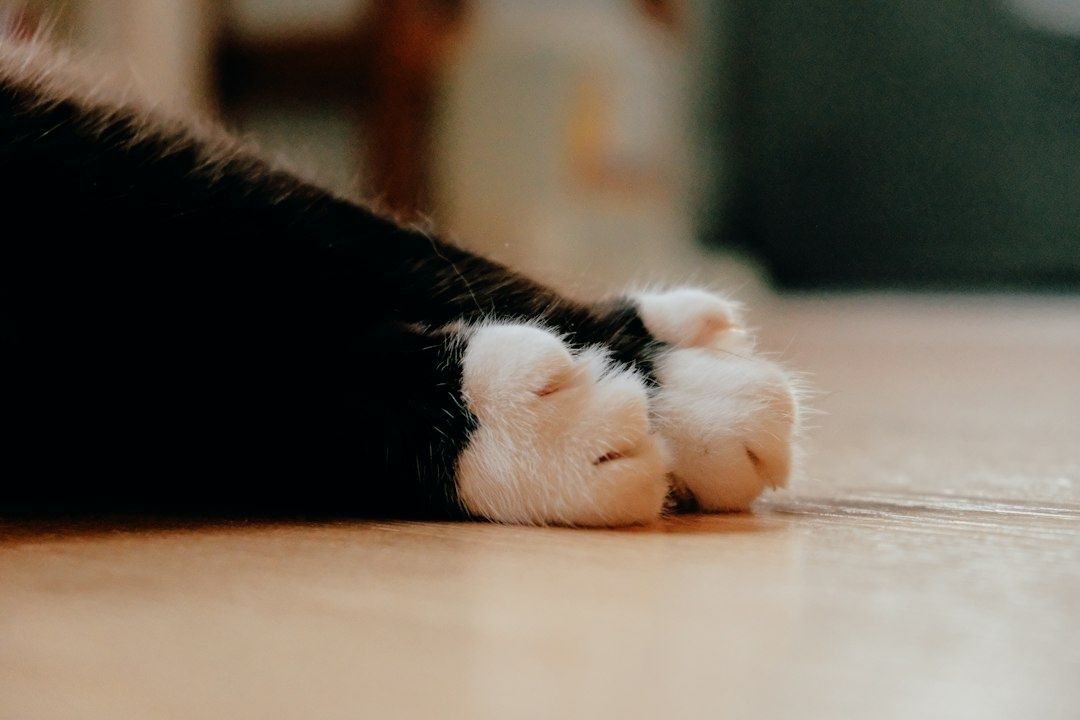
The digital pads also deserve careful consideration. They are richly supplied with sensory receptors that help a cat assess surfaces, regulate footing, and make precise movements. A paw is therefore both a weight-bearing structure and an important source of tactile information. Handling should avoid squeezing the pads or bending the toes into an unnatural position. For cats that exhibit pronounced stress or avoidance around handling, structured behavioral interventions are often required; empirical outcomes and clinical methodologies are detailed in research examining feline claw-trimming desensitization protocols.
Claw maintenance varies across the paw. The front feet usually receive more attention because the forelimbs perform much of the scratching, climbing, and grasping work. Rear claws may wear differently and can grow at a different rate, depending on activity, age, gait, and access to scratching surfaces. The front dewclaws are especially important to inspect because they do not contact the ground in the same way as the weight-bearing toes and may become long, curved, or caught on fabric. Many cats have 18 claws in total, including these dewclaws.
| Area | Practical care consideration |
|---|---|
| Front claws | Inspect regularly because they are used extensively for scratching and climbing. |
| Rear claws | Check for uneven growth, splitting, and overlong tips even when they appear less prominent. |
| Dewclaws | Pay particular attention because they may not wear naturally and can curve toward the skin. |
| Pink quick | Preserve it completely; injury can cause pain and bleeding. |
Natural scratching remains an important part of claw care and behavioral health, but it does not always keep every nail short. Older cats, cats with limited mobility, and indoor cats who use scratching surfaces selectively may need routine trimming. Overgrown claws can snag, split, curl toward the paw pad, or interfere with comfortable movement. If a claw is embedded, severely split, infected, or too difficult to examine safely, veterinary assistance is the appropriate choice.
Reading Subtle Displacement Behaviors Before Anxiety Escalates
Feline stress often appears in small movements before it develops into hissing, swatting, or escape behavior. Skin twitching along the back, repeated lip licking, a sudden pause in breathing rhythm, pupil dilation, flattened or rotating ears, and a lowered head can all indicate that the current level of handling is becoming uncomfortable. A cat may also turn the head away, groom abruptly, shift weight, or become unusually still. Stillness should not automatically be interpreted as relaxation; some cats freeze when they are uncertain or frightened.
Paw retraction is particularly informative. When a cat pulls a paw beneath the chest, curls the toes, or repeatedly withdraws the limb, the message is usually a request for distance rather than active defiance. Respecting that request helps prevent escalation. Desensitization and counterconditioning work best when exposure remains below the point at which the cat becomes overwhelmed. A reward should be offered while the cat is still calm enough to eat and make a deliberate choice.
- Calm markers: soft eyes, neutral or forward ears, loose shoulders, normal breathing, relaxed whiskers, and willingness to accept a treat.
- Early tension: skin twitching, lip licking, turning away, paw withdrawal, increased grooming, or a stiffening tail.
- Escalating stress: wide pupils, crouching, flattened ears, rapid tail movements, growling, hissing, or attempts to escape.
- Appropriate response: stop the handling step, release the paw, allow recovery, and return later at an easier level.
Caregivers should observe the whole cat rather than focusing only on the paw. A relaxed paw attached to a tense body is not evidence of genuine comfort. Equally, a cat may tolerate a brief touch while remaining emotionally uncertain. The goal is a pattern of voluntary participation, relaxed posture, and quick recovery. Short, frequent practice sessions are more constructive than occasional battles.
A Progressive Tactile Desensitization Protocol
Begin in a familiar location where the cat already rests comfortably. Avoid starting immediately after a startling event, during active play, or when the cat is trying to leave. The first goal is simply to create a pleasant association with touch along the limb. Move gradually from areas the cat readily accepts toward the paw, and pair each successful moment with a small, high-value reward. A tiny portion of a favored food is usually sufficient, particularly when delivered promptly.
Pad massage should be light and brief. Use the fingertips to touch the top of the paw, then the side, then the pad, without spreading the toes at first. Once the cat remains relaxed, gently extend one claw by placing your thumb on the dorsal aspect of the toe just behind the nail bed and your index finger on the digital pad underneath, applying gentle top-and-bottom pressure to smoothly protract the claw without pulling or pinching the digit from the sides. Because peripheral nerves carry information about pressure and pain, careful handling matters; the clinical principles described by vetmed.illinois.edu”s anesthesia resource help illustrate why sensory pathways and species-specific sensitivity should never be disregarded.
- Establish a comfortable baseline: stroke from shoulder to foreleg, pause, and reward before reaching the paw.
- Approach the paw gradually: touch the leg, then the top of the paw, stopping immediately if tension appears.
- Introduce pad contact: briefly touch or massage one pad, then reward while the cat remains relaxed.
- Practice toe separation: separate one toe gently without pulling, twisting, or applying excessive pressure.
- Present the trimmer separately: allow the cat to see and smell it without bringing it toward the paw.
- Pair sound with reward: click the tool away from the cat, then offer a treat only if the sound does not produce concern.
- Rehearse a single claw: extend one claw, touch the trimmer to the tip without cutting, and end the session.
Progress should be measured by relaxation rather than by the number of claws completed. If the cat stops eating, retracts the paw, or shows escalating tension, the exercise has advanced too quickly. Return to the last easy step during a later session. Some cats may need several days or weeks of preparation, especially if previous trimming involved force or an accidental cut into the quick. For cats with severe fear, aggression, or a history of painful paw disease, a veterinarian or qualified behavior professional can help design a safer plan.
Executing the Single-Claw Trim with Breeder Precision
Choose a sharp, cat-specific scissor-style trimmer that fits comfortably in the hand and allows a clear view of the cutting edge. Scissor-style tools generally offer controlled placement around a small claw, while dull or poorly fitting equipment can crush, split, or twist the keratin sheath. Keep styptic powder or another veterinarian-approved bleeding-control product nearby, but regard it as an emergency preparation rather than permission to cut close to the quick.
- Position the cat in a stable, familiar posture, preferably with all four feet supported.
- Extend one claw gently and identify the translucent outer tip and the darker pink quick.
- Remove only the sharp terminal hook, leaving a safe margin before the quick.
- Use a clean, deliberate cut at approximately a 45-degree angle, following the natural direction of the claw to reduce crushing and splintering.
- Reward immediately, then release the paw rather than reaching for the next claw automatically.
One claw may be a complete session. A calm finish is more valuable than a full set achieved through increasing resistance. Over time, the cat may offer several claws, but that cooperation should develop through repetition rather than expectation. Inspect the cut surface for cracks and watch for lingering bleeding, limping, licking, swelling, or sensitivity. Any concern about injury, ingrown claws, infection, or severe overgrowth warrants veterinary advice.
Cultivating a Lifetime of Mutual Trust and Gentle Handling
Cooperative nail care is built through hundreds of small, respectful interactions. Briefly touching a paw during an affectionate moment, stroking the legs while the cat is settled, or rewarding a calm response to a harmless grooming tool can maintain familiarity between trims. These exercises should remain separate from moments when the cat is eating, sleeping deeply, or actively seeking escape. Predictability gives the cat a meaningful sense of control.
The most successful routine replaces physical coercion with clear boundaries. A cat learns that a paw will be released when tension appears, that calm behavior earns something valuable, and that grooming ends before discomfort becomes overwhelming. This approach protects the claw”s anatomy, preserves emotional confidence, and makes future handling easier for caregivers, breeders, and veterinary teams alike. With patience and precise observation, nail trimming becomes less a contest of restraint and more a quiet expression of trust.