
The Whispering Signs: How to Read Micro-Tensions and Silent Stress in Your Cat

Beyond the Obvious The Art of Feline Observation

Feline distress rarely begins with a dramatic act. More often, it first appears as a fractional change: a cat pauses before jumping onto a familiar chair, grooms one patch of the lower back with unusual intensity, or rests with the head held slightly lower than usual. Waiting for litter avoidance, sustained hiding, hissing, or overt aggression means waiting until the cat has already spent considerable emotional and physical energy coping. The earlier window is quieter and far more valuable, because small adjustments to comfort, routine, and veterinary care may prevent a transient burden from becoming entrenched.

Masking vulnerability is an ancient survival strategy. A cat that appears weak in the wild may attract danger, so discomfort is often concealed behind stillness, withdrawal, altered movement, or an apparently composed expression. Domestic life does not remove this instinct. A pedigree cat in a carefully managed home may continue eating and using the litter tray while experiencing dental pain, musculoskeletal discomfort, gastrointestinal unease, or environmental anxiety. This is why the owner”s detailed knowledge of normal behavior matters so greatly. A change from an individual cat”s baseline can be more informative than a generic checklist.

Developing a breeder-level eye does not mean diagnosing disease from a glance. It means observing without intruding, comparing the cat with its own established pattern, and recording changes in context. Notice how the face looks during relaxed sleep, how the spine settles during a comfortable loaf, and how quickly the cat returns to calm after a sound or visitor. A short daily observation at the same quiet times can reveal a pattern long before a crisis becomes obvious. If uncertainty remains, a veterinary examination is the appropriate next step, particularly when several subtle signs occur together.

Subtle Cranial Architecture and the Feline Facial Mask

The feline face can register discomfort through remarkably small alterations. A relaxed cat generally has soft eyelids, a naturally positioned head, mobile ears, and whiskers that rest without conspicuous bunching. A sustained squint, tightened orbital region, or narrowed opening of both eyes deserves attention, especially when it appears outside bright light or drowsiness. Pupil size must be interpreted in context because illumination, excitement, medication, and illness can all influence it. A pupil change that persists despite stable lighting, particularly alongside facial tension or withdrawal, is more meaningful than a single enlarged pupil observed during play.

Ear and whisker carriage add important detail. Pinnae that rotate outward or flatten, whiskers that clump or project rigidly forward, and tension around the muzzle may form part of a pain-related facial pattern. The Feline Grimace Scale evaluates features such as ear position, orbital tightening, muzzle tension, whisker position, and head carriage, but it is principally a structured aid for trained assessment rather than a substitute for examination. Breed conformation, age, sedation, and individual expression can affect appearance. A single facial feature does not prove pain, yet a cluster that is new for that cat should not be dismissed.
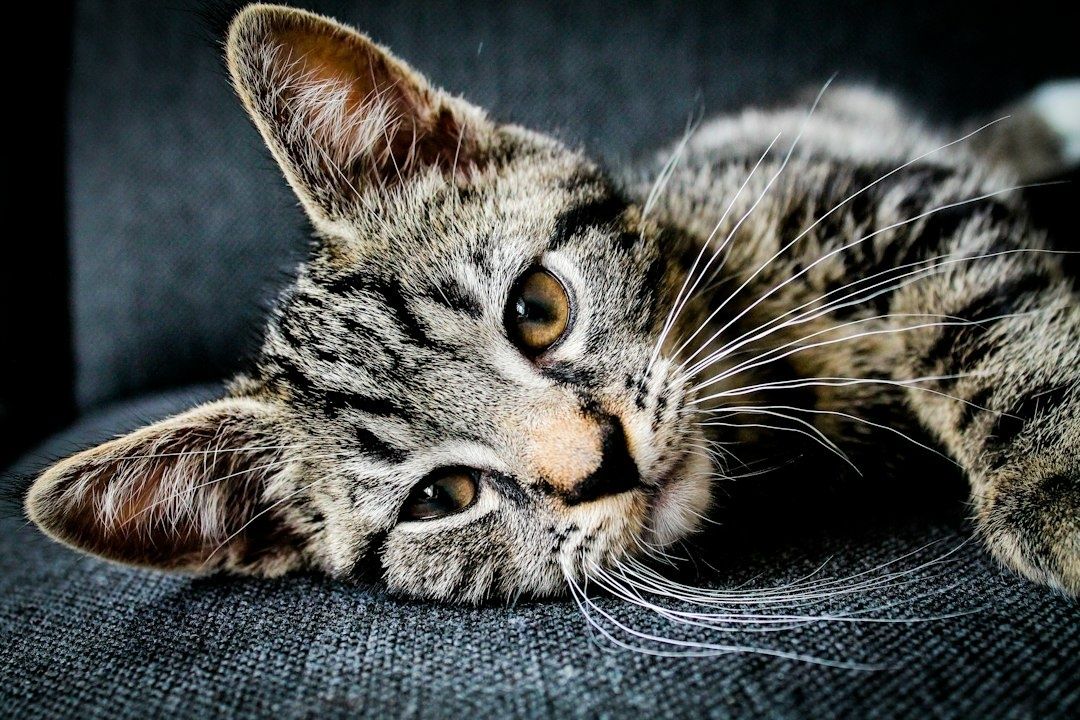
Tabby cat resting with ears upright and eyes partly open
Comparing a cat”s relaxed facial posture with its usual baseline can make subtle changes in comfort easier to recognize.

For an accessible discussion of how owners can recognize hidden discomfort, see this explanation of subtle feline pain signs. Facial observation becomes most useful when paired with behavior, appetite, mobility, and posture. Record the time, duration, situation, and accompanying changes rather than attempting to assign a diagnosis at home.

  • Eyes: look for persistent squinting, narrowed openings, or tension around the orbits when lighting is unchanged.
  • Ears: note flattened or outward-rotated pinnae, particularly when the cat is otherwise quiet.
  • Whiskers and muzzle: observe bunching, rigid forward projection, or a tightened mouth region.
  • Head carriage: a lowered head or reluctance to lift it may be significant when it differs from the usual resting posture.
  • Context: compare the entire facial pattern with the cat”s normal expression and seek veterinary advice when changes persist.

Reading the Spine Flank Rippling and Somatic Murmurs

Grooming is normally rhythmic, distributed, and followed by a return to ordinary rest. Nervous or discomfort-related grooming is often more localized and repetitive. A cat may repeatedly lick the lower lumbar region, inner thigh, or flank while leaving other areas untouched. Hair thinning, broken coat, moist skin, or a sudden fascination with one spot makes the pattern more important. Skin disease, flea allergy, pain, orthopedic strain, and emotional stress can overlap in appearance, so the location alone cannot identify the cause.

Sudden rippling across the skin, brief flank fasciculations, or a rapid twitch followed by turning toward the back may reflect sensory irritation, pain, emotional arousal, or a neurological problem. These episodes should be filmed from a respectful distance if possible, because a recording can help a veterinarian distinguish grooming, startle, dermatological irritation, and abnormal involuntary movement. A neurological examination begins with observation of posture, movement, mentation, and behavior before more disturbing procedures are attempted. That principle is valuable at home as well: observe first, restrain last, and never repeatedly provoke an episode for demonstration.

Posture offers another quiet message. A true relaxed loaf has a relatively even distribution of weight, soft facial features, and an ability to shift position without visible effort. A guarded tuck tends to look compressed and immobile, with the back rounded, limbs held tightly beneath the body, neck lowered, and muscles remaining ready rather than settled. A cat that repeatedly changes position, avoids stretching, or sleeps only in unusual locations may be trying to manage discomfort. Since cats can mask pain, these signs become especially important when accompanied by reduced jumping, altered litter-tray use, appetite changes, or withdrawal.

  • Compare grooming frequency and location with the cat”s established routine.
  • Check the coat and skin visually, but avoid vigorous brushing or pressing on a tender area.
  • Film rippling or twitching without touching the cat or using bright lights.
  • Observe whether the cat can rise, walk, stretch, and turn smoothly after resting.
  • Arrange veterinary assessment for persistent episodes, skin damage, weakness, pain, or sudden changes in movement.

Mapping Resting Respiratory Cadence and Micro-Movements

Respiration is most useful as a trend rather than a single isolated number. Count chest rises while the cat is genuinely asleep or deeply settled, not while purring, grooming, watching a bird, or reacting to household activity. One rise and fall counts as one breath. Count for thirty seconds and double the result, or count for a full minute when the rhythm is irregular. Take readings at similar times over several days so that excitement, recent exercise, room temperature, and sleep stage do not distort the comparison.

Light slumber may include whisker movement, paw flexing, ear rotations, and brief changes in breathing. Deep sleep is usually more settled, although dreams and normal movement can still occur. A persistent increase from the cat”s usual resting pattern, visibly increased effort, open-mouth breathing, abdominal exertion, pale or blue-tinged mucous membranes, collapse, or marked distress warrants urgent veterinary guidance. Quiet respiratory changes should not automatically be labelled stress, since heart, lung, pain, and systemic conditions can produce similar findings. As background reading, feline health research on resting respiratory patterns illustrates why baseline physiological observations can be useful, while also reminding owners that clinical interpretation belongs with a veterinarian.

Calm baseline Quiet micro-tension
Breathing remains even during settled sleep Breathing becomes consistently faster or more effortful at rest
Ears move occasionally toward meaningful sounds One or both ears swivel repeatedly during otherwise quiet periods
Whiskers rest naturally and the eyes soften Whiskers bunch, eyes narrow, or the muzzle appears tight
The body unfolds and shifts position comfortably The cat remains rigid, hunched, or reluctant to reposition
Grooming is balanced across the coat One region receives repeated, urgent attention

Curating Environmental Micro-Adjustments in the Home

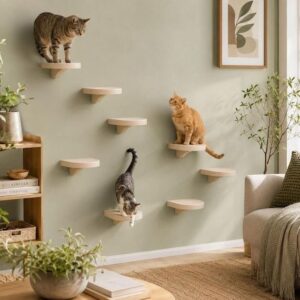
Environmental design can reduce the number of small threats a cat must continuously monitor. Vertical territory is particularly useful when several people, animals, or household activities share the floor. Shelves, stable climbing furniture, window perches, and elevated resting sites should create more than one route through important areas rather than forcing the cat into a narrow corridor. A high platform is not genuinely secure if the only exit passes directly beside a dog”s bed, a noisy appliance, or another cat”s preferred resting place.

Subtle sensory conditions matter as well. Sudden electronic tones, appliance vibration, construction noise, strong fragrances, and unpredictable foot traffic can keep a sensitive cat in a state of low-level vigilance. Reduce unnecessary noise where practical, provide undisturbed sleeping spaces, and keep food, water, litter trays, scratching areas, and resting places distributed so that access does not depend on passing a social rival. A pheromone diffuser may help some cats, but it should complement, not replace, medical assessment, behavioral planning, and improvements to the physical environment.

  1. Observe without intervening. Identify where the cat hides, rests, eats, grooms, and hesitates. Note bottlenecks, startling sounds, and places where another pet can block passage.
  2. Protect retreat. Add covered beds, open carriers, boxes, or elevated platforms with more than one visible escape direction. Never pull the cat from a chosen refuge.
  3. Improve resource access. Separate essential resources and maintain clean, easily reached litter areas. In multi-cat homes, prevent one animal from controlling a doorway or route.
  4. Lower sensory load. Move buzzing electronics, soften sudden household noise, moderate strong scents, and preserve predictable feeding and rest periods.
  5. Change one variable at a time. Introduce adjustments gradually, then observe for several days. A cat”s response is clearest when the environment has not been altered all at once.
  6. Review the pattern. If facial tension, altered respiration, repetitive grooming, guarding, or withdrawal continues despite environmental support, contact a veterinarian rather than assuming the problem is purely emotional.

Transform Daily Observation Into a Lifelong Sanctuary for Your Cat

Careful observation works best as a low-pressure ritual rather than an examination imposed on the cat. During a quiet morning or evening, notice the face, breathing, posture, movement, grooming, appetite, and willingness to engage. A brief dated note, paired with a short video when appropriate, can reveal gradual change and give a veterinarian far more useful information than the statement that the cat simply seems different. The goal is not to scrutinize every blink, but to recognize meaningful departures from a familiar baseline.

When micro-tensions persist beyond forty-eight hours, recur with increasing frequency, or accompany changes in eating, drinking, elimination, mobility, breathing, or social behavior, prompt veterinary collaboration is wise. Emergency signs such as open-mouth breathing, collapse, severe weakness, obvious trauma, or inability to urinate require immediate attention. A cat”s communication is refined, quiet, and often expressed through posture before sound. Meeting that communication with patience, accurate observation, and timely professional care turns an attentive home into a genuine sanctuary.
The Whispering Signs: How to Read Micro-Tensions and Silent Stress in Your Cat

Beyond the Obvious The Art of Feline Observation

Feline distress rarely begins with a dramatic act. More often, it first appears as a fractional change: a cat pauses before jumping onto a familiar chair, grooms one patch of the lower back with unusual intensity, or rests with the head held slightly lower than usual. Waiting for litter avoidance, sustained hiding, hissing, or overt aggression means waiting until the cat has already spent considerable emotional and physical energy coping. The earlier window is quieter and far more valuable, because small adjustments to comfort, routine, and veterinary care may prevent a transient burden from becoming entrenched.

Masking vulnerability is an ancient survival strategy. A cat that appears weak in the wild may attract danger, so discomfort is often concealed behind stillness, withdrawal, altered movement, or an apparently composed expression. Domestic life does not remove this instinct. A pedigree cat in a carefully managed home may continue eating and using the litter tray while experiencing dental pain, musculoskeletal discomfort, gastrointestinal unease, or environmental anxiety. This is why the owner”s detailed knowledge of normal behavior matters so greatly. A change from an individual cat”s baseline can be more informative than a generic checklist.

Developing a breeder-level eye does not mean diagnosing disease from a glance. It means observing without intruding, comparing the cat with its own established pattern, and recording changes in context. Notice how the face looks during relaxed sleep, how the spine settles during a comfortable loaf, and how quickly the cat returns to calm after a sound or visitor. A short daily observation at the same quiet times can reveal a pattern long before a crisis becomes obvious. If uncertainty remains, a veterinary examination is the appropriate next step, particularly when several subtle signs occur together.

Subtle Cranial Architecture and the Feline Facial Mask

The feline face can register discomfort through remarkably small alterations. A relaxed cat generally has soft eyelids, a naturally positioned head, mobile ears, and whiskers that rest without conspicuous bunching. A sustained squint, tightened orbital region, or narrowed opening of both eyes deserves attention, especially when it appears outside bright light or drowsiness. Pupil size must be interpreted in context because illumination, excitement, medication, and illness can all influence it. A pupil change that persists despite stable lighting, particularly alongside facial tension or withdrawal, is more meaningful than a single enlarged pupil observed during play.

Ear and whisker carriage add important detail. Pinnae that rotate outward or flatten, whiskers that clump or project rigidly forward, and tension around the muzzle may form part of a pain-related facial pattern. The Feline Grimace Scale evaluates features such as ear position, orbital tightening, muzzle tension, whisker position, and head carriage, but it is principally a structured aid for trained assessment rather than a substitute for examination. Breed conformation, age, sedation, and individual expression can affect appearance. A single facial feature does not prove pain, yet a cluster that is new for that cat should not be dismissed.

Tabby cat resting with ears upright and eyes partly open
Comparing a cat”s relaxed facial posture with its usual baseline can make subtle changes in comfort easier to recognize.

For an accessible discussion of how owners can recognize hidden discomfort, see this explanation of subtle feline pain signs. Facial observation becomes most useful when paired with behavior, appetite, mobility, and posture. Record the time, duration, situation, and accompanying changes rather than attempting to assign a diagnosis at home.

  • Eyes: look for persistent squinting, narrowed openings, or tension around the orbits when lighting is unchanged.
  • Ears: note flattened or outward-rotated pinnae, particularly when the cat is otherwise quiet.
  • Whiskers and muzzle: observe bunching, rigid forward projection, or a tightened mouth region.
  • Head carriage: a lowered head or reluctance to lift it may be significant when it differs from the usual resting posture.
  • Context: compare the entire facial pattern with the cat”s normal expression and seek veterinary advice when changes persist.

Reading the Spine Flank Rippling and Somatic Murmurs

Grooming is normally rhythmic, distributed, and followed by a return to ordinary rest. Nervous or discomfort-related grooming is often more localized and repetitive. A cat may repeatedly lick the lower lumbar region, inner thigh, or flank while leaving other areas untouched. Hair thinning, broken coat, moist skin, or a sudden fascination with one spot makes the pattern more important. Skin disease, flea allergy, pain, orthopedic strain, and emotional stress can overlap in appearance, so the location alone cannot identify the cause.

Sudden rippling across the skin, brief flank fasciculations, or a rapid twitch followed by turning toward the back may reflect sensory irritation, pain, emotional arousal, or a neurological problem. These episodes should be filmed from a respectful distance if possible, because a recording can help a veterinarian distinguish grooming, startle, dermatological irritation, and abnormal involuntary movement. A neurological examination begins with observation of posture, movement, mentation, and behavior before more disturbing procedures are attempted. That principle is valuable at home as well: observe first, restrain last, and never repeatedly provoke an episode for demonstration.

Posture offers another quiet message. A true relaxed loaf has a relatively even distribution of weight, soft facial features, and an ability to shift position without visible effort. A guarded tuck tends to look compressed and immobile, with the back rounded, limbs held tightly beneath the body, neck lowered, and muscles remaining ready rather than settled. A cat that repeatedly changes position, avoids stretching, or sleeps only in unusual locations may be trying to manage discomfort. Since cats can mask pain, these signs become especially important when accompanied by reduced jumping, altered litter-tray use, appetite changes, or withdrawal.

  • Compare grooming frequency and location with the cat”s established routine.
  • Check the coat and skin visually, but avoid vigorous brushing or pressing on a tender area.
  • Film rippling or twitching without touching the cat or using bright lights.
  • Observe whether the cat can rise, walk, stretch, and turn smoothly after resting.
  • Arrange veterinary assessment for persistent episodes, skin damage, weakness, pain, or sudden changes in movement.

Mapping Resting Respiratory Cadence and Micro-Movements

Respiration is most useful as a trend rather than a single isolated number. Count chest rises while the cat is genuinely asleep or deeply settled, not while purring, grooming, watching a bird, or reacting to household activity. One rise and fall counts as one breath. Count for thirty seconds and double the result, or count for a full minute when the rhythm is irregular. Take readings at similar times over several days so that excitement, recent exercise, room temperature, and sleep stage do not distort the comparison.

Light slumber may include whisker movement, paw flexing, ear rotations, and brief changes in breathing. Deep sleep is usually more settled, although dreams and normal movement can still occur. A persistent increase from the cat”s usual resting pattern, visibly increased effort, open-mouth breathing, abdominal exertion, pale or blue-tinged mucous membranes, collapse, or marked distress warrants urgent veterinary guidance. Quiet respiratory changes should not automatically be labelled stress, since heart, lung, pain, and systemic conditions can produce similar findings. As background reading, feline health research on resting respiratory patterns illustrates why baseline physiological observations can be useful, while also reminding owners that clinical interpretation belongs with a veterinarian.

Calm baseline Quiet micro-tension
Breathing remains even during settled sleep Breathing becomes consistently faster or more effortful at rest
Ears move occasionally toward meaningful sounds One or both ears swivel repeatedly during otherwise quiet periods
Whiskers rest naturally and the eyes soften Whiskers bunch, eyes narrow, or the muzzle appears tight
The body unfolds and shifts position comfortably The cat remains rigid, hunched, or reluctant to reposition
Grooming is balanced across the coat One region receives repeated, urgent attention

Curating Environmental Micro-Adjustments in the Home

Environmental design can reduce the number of small threats a cat must continuously monitor. Vertical territory is particularly useful when several people, animals, or household activities share the floor. Shelves, stable climbing furniture, window perches, and elevated resting sites should create more than one route through important areas rather than forcing the cat into a narrow corridor. A high platform is not genuinely secure if the only exit passes directly beside a dog”s bed, a noisy appliance, or another cat”s preferred resting place.

Subtle sensory conditions matter as well. Sudden electronic tones, appliance vibration, construction noise, strong fragrances, and unpredictable foot traffic can keep a sensitive cat in a state of low-level vigilance. Reduce unnecessary noise where practical, provide undisturbed sleeping spaces, and keep food, water, litter trays, scratching areas, and resting places distributed so that access does not depend on passing a social rival. A pheromone diffuser may help some cats, but it should complement, not replace, medical assessment, behavioral planning, and improvements to the physical environment.

  1. Observe without intervening. Identify where the cat hides, rests, eats, grooms, and hesitates. Note bottlenecks, startling sounds, and places where another pet can block passage.
  2. Protect retreat. Add covered beds, open carriers, boxes, or elevated platforms with more than one visible escape direction. Never pull the cat from a chosen refuge.
  3. Improve resource access. Separate essential resources and maintain clean, easily reached litter areas. In multi-cat homes, prevent one animal from controlling a doorway or route.
  4. Lower sensory load. Move buzzing electronics, soften sudden household noise, moderate strong scents, and preserve predictable feeding and rest periods.
  5. Change one variable at a time. Introduce adjustments gradually, then observe for several days. A cat”s response is clearest when the environment has not been altered all at once.
  6. Review the pattern. If facial tension, altered respiration, repetitive grooming, guarding, or withdrawal continues despite environmental support, contact a veterinarian rather than assuming the problem is purely emotional.

Transform Daily Observation Into a Lifelong Sanctuary for Your Cat

Careful observation works best as a low-pressure ritual rather than an examination imposed on the cat. During a quiet morning or evening, notice the face, breathing, posture, movement, grooming, appetite, and willingness to engage. A brief dated note, paired with a short video when appropriate, can reveal gradual change and give a veterinarian far more useful information than the statement that the cat simply seems different. The goal is not to scrutinize every blink, but to recognize meaningful departures from a familiar baseline.

When micro-tensions persist beyond forty-eight hours, recur with increasing frequency, or accompany changes in eating, drinking, elimination, mobility, breathing, or social behavior, prompt veterinary collaboration is wise. Emergency signs such as open-mouth breathing, collapse, severe weakness, obvious trauma, or inability to urinate require immediate attention. A cat”s communication is refined, quiet, and often expressed through posture before sound. Meeting that communication with patience, accurate observation, and timely professional care turns an attentive home into a genuine sanctuary.

The Whispering Signs: How to Read Micro-Tensions and Silent Stress in Your Cat

Beyond the Obvious The Art of Feline Observation

Feline distress rarely begins with a dramatic act. More often, it first appears as a fractional change: a cat pauses before jumping onto a familiar chair, grooms one patch of the lower back with unusual intensity, or rests with the head held slightly lower than usual. Waiting for litter avoidance, sustained hiding, hissing, or overt aggression means waiting until the cat has already spent considerable emotional and physical energy coping. The earlier window is quieter and far more valuable, because small adjustments to comfort, routine, and veterinary care may prevent a transient burden from becoming entrenched.

Masking vulnerability is an ancient survival strategy. A cat that appears weak in the wild may attract danger, so discomfort is often concealed behind stillness, withdrawal, altered movement, or an apparently composed expression. Domestic life does not remove this instinct. A pedigree cat in a carefully managed home may continue eating and using the litter tray while experiencing dental pain, musculoskeletal discomfort, gastrointestinal unease, or environmental anxiety. This is why the owner”s detailed knowledge of normal behavior matters so greatly. A change from an individual cat”s baseline can be more informative than a generic checklist.

Developing a breeder-level eye does not mean diagnosing disease from a glance. It means observing without intruding, comparing the cat with its own established pattern, and recording changes in context. Notice how the face looks during relaxed sleep, how the spine settles during a comfortable loaf, and how quickly the cat returns to calm after a sound or visitor. A short daily observation at the same quiet times can reveal a pattern long before a crisis becomes obvious. If uncertainty remains, a veterinary examination is the appropriate next step, particularly when several subtle signs occur together.

Subtle Cranial Architecture and the Feline Facial Mask

The feline face can register discomfort through remarkably small alterations. A relaxed cat generally has soft eyelids, a naturally positioned head, mobile ears, and whiskers that rest without conspicuous bunching. A sustained squint, tightened orbital region, or narrowed opening of both eyes deserves attention, especially when it appears outside bright light or drowsiness. Pupil size must be interpreted in context because illumination, excitement, medication, and illness can all influence it. A pupil change that persists despite stable lighting, particularly alongside facial tension or withdrawal, is more meaningful than a single enlarged pupil observed during play.

Ear and whisker carriage add important detail. Pinnae that rotate outward or flatten, whiskers that clump or project rigidly forward, and tension around the muzzle may form part of a pain-related facial pattern. The Feline Grimace Scale evaluates features such as ear position, orbital tightening, muzzle tension, whisker position, and head carriage, but it is principally a structured aid for trained assessment rather than a substitute for examination. Breed conformation, age, sedation, and individual expression can affect appearance. A single facial feature does not prove pain, yet a cluster that is new for that cat should not be dismissed.

Tabby cat resting with ears upright and eyes partly open
Comparing a cat”s relaxed facial posture with its usual baseline can make subtle changes in comfort easier to recognize.

For an accessible discussion of how owners can recognize hidden discomfort, see this explanation of subtle feline pain signs. Facial observation becomes most useful when paired with behavior, appetite, mobility, and posture. Record the time, duration, situation, and accompanying changes rather than attempting to assign a diagnosis at home.

  • Eyes: look for persistent squinting, narrowed openings, or tension around the orbits when lighting is unchanged.
  • Ears: note flattened or outward-rotated pinnae, particularly when the cat is otherwise quiet.
  • Whiskers and muzzle: observe bunching, rigid forward projection, or a tightened mouth region.
  • Head carriage: a lowered head or reluctance to lift it may be significant when it differs from the usual resting posture.
  • Context: compare the entire facial pattern with the cat”s normal expression and seek veterinary advice when changes persist.

Reading the Spine Flank Rippling and Somatic Murmurs

Grooming is normally rhythmic, distributed, and followed by a return to ordinary rest. Nervous or discomfort-related grooming is often more localized and repetitive. A cat may repeatedly lick the lower lumbar region, inner thigh, or flank while leaving other areas untouched. Hair thinning, broken coat, moist skin, or a sudden fascination with one spot makes the pattern more important. Skin disease, flea allergy, pain, orthopedic strain, and emotional stress can overlap in appearance, so the location alone cannot identify the cause.

Sudden rippling across the skin, brief flank fasciculations, or a rapid twitch followed by turning toward the back may reflect sensory irritation, pain, emotional arousal, or a neurological problem. These episodes should be filmed from a respectful distance if possible, because a recording can help a veterinarian distinguish grooming, startle, dermatological irritation, and abnormal involuntary movement. A neurological examination begins with observation of posture, movement, mentation, and behavior before more disturbing procedures are attempted. That principle is valuable at home as well: observe first, restrain last, and never repeatedly provoke an episode for demonstration.

Posture offers another quiet message. A true relaxed loaf has a relatively even distribution of weight, soft facial features, and an ability to shift position without visible effort. A guarded tuck tends to look compressed and immobile, with the back rounded, limbs held tightly beneath the body, neck lowered, and muscles remaining ready rather than settled. A cat that repeatedly changes position, avoids stretching, or sleeps only in unusual locations may be trying to manage discomfort. Since cats can mask pain, these signs become especially important when accompanied by reduced jumping, altered litter-tray use, appetite changes, or withdrawal.

  • Compare grooming frequency and location with the cat”s established routine.
  • Check the coat and skin visually, but avoid vigorous brushing or pressing on a tender area.
  • Film rippling or twitching without touching the cat or using bright lights.
  • Observe whether the cat can rise, walk, stretch, and turn smoothly after resting.
  • Arrange veterinary assessment for persistent episodes, skin damage, weakness, pain, or sudden changes in movement.

Mapping Resting Respiratory Cadence and Micro-Movements

Respiration is most useful as a trend rather than a single isolated number. Count chest rises while the cat is genuinely asleep or deeply settled, not while purring, grooming, watching a bird, or reacting to household activity. One rise and fall counts as one breath. Count for thirty seconds and double the result, or count for a full minute when the rhythm is irregular. Take readings at similar times over several days so that excitement, recent exercise, room temperature, and sleep stage do not distort the comparison.

Light slumber may include whisker movement, paw flexing, ear rotations, and brief changes in breathing. Deep sleep is usually more settled, although dreams and normal movement can still occur. A persistent increase from the cat”s usual resting pattern, visibly increased effort, open-mouth breathing, abdominal exertion, pale or blue-tinged mucous membranes, collapse, or marked distress warrants urgent veterinary guidance. Quiet respiratory changes should not automatically be labelled stress, since heart, lung, pain, and systemic conditions can produce similar findings. As background reading, feline health research on resting respiratory patterns illustrates why baseline physiological observations can be useful, while also reminding owners that clinical interpretation belongs with a veterinarian.

Calm baseline Quiet micro-tension
Breathing remains even during settled sleep Breathing becomes consistently faster or more effortful at rest
Ears move occasionally toward meaningful sounds One or both ears swivel repeatedly during otherwise quiet periods
Whiskers rest naturally and the eyes soften Whiskers bunch, eyes narrow, or the muzzle appears tight
The body unfolds and shifts position comfortably The cat remains rigid, hunched, or reluctant to reposition
Grooming is balanced across the coat One region receives repeated, urgent attention

Curating Environmental Micro-Adjustments in the Home

Environmental design can reduce the number of small threats a cat must continuously monitor. Vertical territory is particularly useful when several people, animals, or household activities share the floor. Shelves, stable climbing furniture, window perches, and elevated resting sites should create more than one route through important areas rather than forcing the cat into a narrow corridor. A high platform is not genuinely secure if the only exit passes directly beside a dog”s bed, a noisy appliance, or another cat”s preferred resting place.

Subtle sensory conditions matter as well. Sudden electronic tones, appliance vibration, construction noise, strong fragrances, and unpredictable foot traffic can keep a sensitive cat in a state of low-level vigilance. Reduce unnecessary noise where practical, provide undisturbed sleeping spaces, and keep food, water, litter trays, scratching areas, and resting places distributed so that access does not depend on passing a social rival. A pheromone diffuser may help some cats, but it should complement, not replace, medical assessment, behavioral planning, and improvements to the physical environment.

  1. Observe without intervening. Identify where the cat hides, rests, eats, grooms, and hesitates. Note bottlenecks, startling sounds, and places where another pet can block passage.
  2. Protect retreat. Add covered beds, open carriers, boxes, or elevated platforms with more than one visible escape direction. Never pull the cat from a chosen refuge.
  3. Improve resource access. Separate essential resources and maintain clean, easily reached litter areas. In multi-cat homes, prevent one animal from controlling a doorway or route.
  4. Lower sensory load. Move buzzing electronics, soften sudden household noise, moderate strong scents, and preserve predictable feeding and rest periods.
  5. Change one variable at a time. Introduce adjustments gradually, then observe for several days. A cat”s response is clearest when the environment has not been altered all at once.
  6. Review the pattern. If facial tension, altered respiration, repetitive grooming, guarding, or withdrawal continues despite environmental support, contact a veterinarian rather than assuming the problem is purely emotional.

Transform Daily Observation Into a Lifelong Sanctuary for Your Cat

Careful observation works best as a low-pressure ritual rather than an examination imposed on the cat. During a quiet morning or evening, notice the face, breathing, posture, movement, grooming, appetite, and willingness to engage. A brief dated note, paired with a short video when appropriate, can reveal gradual change and give a veterinarian far more useful information than the statement that the cat simply seems different. The goal is not to scrutinize every blink, but to recognize meaningful departures from a familiar baseline.

When micro-tensions persist beyond forty-eight hours, recur with increasing frequency, or accompany changes in eating, drinking, elimination, mobility, breathing, or social behavior, prompt veterinary collaboration is wise. Emergency signs such as open-mouth breathing, collapse, severe weakness, obvious trauma, or inability to urinate require immediate attention. A cat”s communication is refined, quiet, and often expressed through posture before sound. Meeting that communication with patience, accurate observation, and timely professional care turns an attentive home into a genuine sanctuary.

The Whispering Signs: How to Read Micro-Tensions and Silent Stress in Your Cat

Beyond the Obvious The Art of Feline Observation

Feline distress rarely begins with a dramatic act. More often, it first appears as a fractional change: a cat pauses before jumping onto a familiar chair, grooms one patch of the lower back with unusual intensity, or rests with the head held slightly lower than usual. Waiting for litter avoidance, sustained hiding, hissing, or overt aggression means waiting until the cat has already spent considerable emotional and physical energy coping. The earlier window is quieter and far more valuable, because small adjustments to comfort, routine, and veterinary care may prevent a transient burden from becoming entrenched.

Masking vulnerability is an ancient survival strategy. A cat that appears weak in the wild may attract danger, so discomfort is often concealed behind stillness, withdrawal, altered movement, or an apparently composed expression. Domestic life does not remove this instinct. A pedigree cat in a carefully managed home may continue eating and using the litter tray while experiencing dental pain, musculoskeletal discomfort, gastrointestinal unease, or environmental anxiety. This is why the owner”s detailed knowledge of normal behavior matters so greatly. A change from an individual cat”s baseline can be more informative than a generic checklist.

Developing a breeder-level eye does not mean diagnosing disease from a glance. It means observing without intruding, comparing the cat with its own established pattern, and recording changes in context. Notice how the face looks during relaxed sleep, how the spine settles during a comfortable loaf, and how quickly the cat returns to calm after a sound or visitor. A short daily observation at the same quiet times can reveal a pattern long before a crisis becomes obvious. If uncertainty remains, a veterinary examination is the appropriate next step, particularly when several subtle signs occur together.

Subtle Cranial Architecture and the Feline Facial Mask

The feline face can register discomfort through remarkably small alterations. A relaxed cat generally has soft eyelids, a naturally positioned head, mobile ears, and whiskers that rest without conspicuous bunching. A sustained squint, tightened orbital region, or narrowed opening of both eyes deserves attention, especially when it appears outside bright light or drowsiness. Pupil size must be interpreted in context because illumination, excitement, medication, and illness can all influence it. A pupil change that persists despite stable lighting, particularly alongside facial tension or withdrawal, is more meaningful than a single enlarged pupil observed during play.

Ear and whisker carriage add important detail. Pinnae that rotate outward or flatten, whiskers that clump or project rigidly forward, and tension around the muzzle may form part of a pain-related facial pattern. The Feline Grimace Scale evaluates features such as ear position, orbital tightening, muzzle tension, whisker position, and head carriage, but it is principally a structured aid for trained assessment rather than a substitute for examination. Breed conformation, age, sedation, and individual expression can affect appearance. A single facial feature does not prove pain, yet a cluster that is new for that cat should not be dismissed.

Tabby cat resting with ears upright and eyes partly open
Comparing a cat”s relaxed facial posture with its usual baseline can make subtle changes in comfort easier to recognize.

For an accessible discussion of how owners can recognize hidden discomfort, see this explanation of subtle feline pain signs. Facial observation becomes most useful when paired with behavior, appetite, mobility, and posture. Record the time, duration, situation, and accompanying changes rather than attempting to assign a diagnosis at home.

  • Eyes: look for persistent squinting, narrowed openings, or tension around the orbits when lighting is unchanged.
  • Ears: note flattened or outward-rotated pinnae, particularly when the cat is otherwise quiet.
  • Whiskers and muzzle: observe bunching, rigid forward projection, or a tightened mouth region.
  • Head carriage: a lowered head or reluctance to lift it may be significant when it differs from the usual resting posture.
  • Context: compare the entire facial pattern with the cat”s normal expression and seek veterinary advice when changes persist.

Reading the Spine Flank Rippling and Somatic Murmurs

Grooming is normally rhythmic, distributed, and followed by a return to ordinary rest. Nervous or discomfort-related grooming is often more localized and repetitive. A cat may repeatedly lick the lower lumbar region, inner thigh, or flank while leaving other areas untouched. Hair thinning, broken coat, moist skin, or a sudden fascination with one spot makes the pattern more important. Skin disease, flea allergy, pain, orthopedic strain, and emotional stress can overlap in appearance, so the location alone cannot identify the cause.

Sudden rippling across the skin, brief flank fasciculations, or a rapid twitch followed by turning toward the back may reflect sensory irritation, pain, emotional arousal, or a neurological problem. These episodes should be filmed from a respectful distance if possible, because a recording can help a veterinarian distinguish grooming, startle, dermatological irritation, and abnormal involuntary movement. A neurological examination begins with observation of posture, movement, mentation, and behavior before more disturbing procedures are attempted. That principle is valuable at home as well: observe first, restrain last, and never repeatedly provoke an episode for demonstration.

Posture offers another quiet message. A true relaxed loaf has a relatively even distribution of weight, soft facial features, and an ability to shift position without visible effort. A guarded tuck tends to look compressed and immobile, with the back rounded, limbs held tightly beneath the body, neck lowered, and muscles remaining ready rather than settled. A cat that repeatedly changes position, avoids stretching, or sleeps only in unusual locations may be trying to manage discomfort. Since cats can mask pain, these signs become especially important when accompanied by reduced jumping, altered litter-tray use, appetite changes, or withdrawal.

  • Compare grooming frequency and location with the cat”s established routine.
  • Check the coat and skin visually, but avoid vigorous brushing or pressing on a tender area.
  • Film rippling or twitching without touching the cat or using bright lights.
  • Observe whether the cat can rise, walk, stretch, and turn smoothly after resting.
  • Arrange veterinary assessment for persistent episodes, skin damage, weakness, pain, or sudden changes in movement.

Mapping Resting Respiratory Cadence and Micro-Movements

Respiration is most useful as a trend rather than a single isolated number. Count chest rises while the cat is genuinely asleep or deeply settled, not while purring, grooming, watching a bird, or reacting to household activity. One rise and fall counts as one breath. Count for thirty seconds and double the result, or count for a full minute when the rhythm is irregular. Take readings at similar times over several days so that excitement, recent exercise, room temperature, and sleep stage do not distort the comparison.

Light slumber may include whisker movement, paw flexing, ear rotations, and brief changes in breathing. Deep sleep is usually more settled, although dreams and normal movement can still occur. A persistent increase from the cat”s usual resting pattern, visibly increased effort, open-mouth breathing, abdominal exertion, pale or blue-tinged mucous membranes, collapse, or marked distress warrants urgent veterinary guidance. Quiet respiratory changes should not automatically be labelled stress, since heart, lung, pain, and systemic conditions can produce similar findings. As background reading, feline health research on resting respiratory patterns illustrates why baseline physiological observations can be useful, while also reminding owners that clinical interpretation belongs with a veterinarian.

Calm baseline Quiet micro-tension
Breathing remains even during settled sleep Breathing becomes consistently faster or more effortful at rest
Ears move occasionally toward meaningful sounds One or both ears swivel repeatedly during otherwise quiet periods
Whiskers rest naturally and the eyes soften Whiskers bunch, eyes narrow, or the muzzle appears tight
The body unfolds and shifts position comfortably The cat remains rigid, hunched, or reluctant to reposition
Grooming is balanced across the coat One region receives repeated, urgent attention

Curating Environmental Micro-Adjustments in the Home

Environmental design can reduce the number of small threats a cat must continuously monitor. Vertical territory is particularly useful when several people, animals, or household activities share the floor. Shelves, stable climbing furniture, window perches, and elevated resting sites should create more than one route through important areas rather than forcing the cat into a narrow corridor. A high platform is not genuinely secure if the only exit passes directly beside a dog”s bed, a noisy appliance, or another cat”s preferred resting place.

Subtle sensory conditions matter as well. Sudden electronic tones, appliance vibration, construction noise, strong fragrances, and unpredictable foot traffic can keep a sensitive cat in a state of low-level vigilance. Reduce unnecessary noise where practical, provide undisturbed sleeping spaces, and keep food, water, litter trays, scratching areas, and resting places distributed so that access does not depend on passing a social rival. A pheromone diffuser may help some cats, but it should complement, not replace, medical assessment, behavioral planning, and improvements to the physical environment.

  1. Observe without intervening. Identify where the cat hides, rests, eats, grooms, and hesitates. Note bottlenecks, startling sounds, and places where another pet can block passage.
  2. Protect retreat. Add covered beds, open carriers, boxes, or elevated platforms with more than one visible escape direction. Never pull the cat from a chosen refuge.
  3. Improve resource access. Separate essential resources and maintain clean, easily reached litter areas. In multi-cat homes, prevent one animal from controlling a doorway or route.
  4. Lower sensory load. Move buzzing electronics, soften sudden household noise, moderate strong scents, and preserve predictable feeding and rest periods.
  5. Change one variable at a time. Introduce adjustments gradually, then observe for several days. A cat”s response is clearest when the environment has not been altered all at once.
  6. Review the pattern. If facial tension, altered respiration, repetitive grooming, guarding, or withdrawal continues despite environmental support, contact a veterinarian rather than assuming the problem is purely emotional.

Transform Daily Observation Into a Lifelong Sanctuary for Your Cat

Careful observation works best as a low-pressure ritual rather than an examination imposed on the cat. During a quiet morning or evening, notice the face, breathing, posture, movement, grooming, appetite, and willingness to engage. A brief dated note, paired with a short video when appropriate, can reveal gradual change and give a veterinarian far more useful information than the statement that the cat simply seems different. The goal is not to scrutinize every blink, but to recognize meaningful departures from a familiar baseline.

When micro-tensions persist beyond forty-eight hours, recur with increasing frequency, or accompany changes in eating, drinking, elimination, mobility, breathing, or social behavior, prompt veterinary collaboration is wise. Emergency signs such as open-mouth breathing, collapse, severe weakness, obvious trauma, or inability to urinate require immediate attention. A cat”s communication is refined, quiet, and often expressed through posture before sound. Meeting that communication with patience, accurate observation, and timely professional care turns an attentive home into a genuine sanctuary.