Why Feline Kidneys Depend on Moisture: The Science Behind Obligate Carnivore Hydration
The Silent Thirst of the Domestic Felid
The domestic cat, Felis catus, carries the legacy of a small desert hunter. Its ancestral environment offered little standing water, yet provided fluid-rich prey such as rodents, birds, and reptiles. A whole prey animal commonly contains roughly 70 to 80 percent water, allowing a hunting cat to meet much of its daily fluid requirement through meals rather than deliberate drinking. This is a vital piece of feline biology, not an incidental preference.
That history helps explain why many cats do not approach a water bowl with the regularity expected of a dog or a human. Their thirst response is comparatively restrained, and their kidneys are remarkably capable of concentrating urine. This adaptation is useful when water is scarce, but it becomes less protective when a cat receives most of its calories from dry food containing under 10 percent moisture. These principles are also consistent with guidance from an Authoritative Source. A bowl may be available all day, yet voluntary drinking frequently fails to replace the difference between fluid-dense prey and a dry ration.
The concern is rarely dramatic at first. Instead, urine may become persistently concentrated, bladder contents may become more saturated with minerals, and delicate renal tubules may face a heavier daily workload. A proactive moisture strategy therefore matters long before a cat develops weight loss, vomiting, urinary straining, or visible changes in thirst. The goal is not to wait for kidney disease to announce itself, but to shape meals, water access, and monitoring around the cat”s original biological design.
Evolutionary Design and the Blunted Thirst Response
African wildcat ancestry endowed cats with several mechanisms for conserving fluid. Their kidneys can produce highly concentrated urine, while their hunting pattern naturally delivers water in small, frequent meals. In a domestic setting, however, the cat may eat one food format repeatedly, often from a bowl that is nutritionally complete but unusually dry. The physiology remains finely tuned for prey, while the feeding environment has changed around it.
Clinical observations support the importance of interpreting hydration through more than the presence of a water bowl. In a prospective study of 976 adult cats and 64 young cats, 88 percent of adult cats had urine specific gravity of at least 1.035, a concentration level considered typical for most apparently healthy cats in that study. Age, diet moisture, sex, fasting, drinking avidity, and measurement method influenced results, but higher-moisture diets did not necessarily produce a dramatic increase in drinking. The findings are detailed in the study on factors affecting urine specific gravity in healthy cats, which also found that older cats below 1.035 were more likely to have an identifiable condition such as chronic kidney disease or hyperthyroidism.
- Whole prey typically supplies approximately 70 to 80 percent moisture.
- Most dry rations contain less than 10 percent moisture.
- Many cats do not voluntarily drink enough to compensate for that dietary gap.
- Urine concentration should be assessed alongside age, diet, clinical history, bloodwork, and repeated urinalysis.
This does not mean that every dry-food diet causes kidney disease, nor that a single urine measurement can diagnose renal impairment. It does mean that moisture should be treated as a central nutritional variable. For cats with urinary disease, previous obstruction, recurrent crystals, kidney concerns, or a family history of inherited disorders, a veterinarian can help establish an individualized feeding and monitoring plan.
The Microscopic Burden Inside Feline Nephrons
Each kidney contains thousands of microscopic filtration units called nephrons. Within them, glomeruli filter blood while renal tubules reclaim water and regulate electrolytes, acids, and waste products. When fluid intake is low, the tubules must conserve more water and produce a smaller volume of highly concentrated urine. This is an impressive survival mechanism, but it is not a reason to assume that chronic concentration is physiologically cost-free.
Urine specific gravity, or USG, provides a practical window into the kidney”s concentrating ability. A value above approximately 1.035 generally indicates that the renal tubules can concentrate effectively, although interpretation depends on hydration status, recent fluid therapy, diet, diabetes, hyperthyroidism, urinary glucose or protein, and other factors. Persistent inability to exceed that level in a well-hydrated cat can be clinically meaningful, and reduced concentrating ability may appear before creatinine, blood urea nitrogen, or SDMA become clearly abnormal. A single reading is never sufficient, but serial measurements can reveal a pattern worth investigating.
| Hydration profile | Expected urinary pattern | Clinical meaning |
|---|---|---|
| Moisture-rich feeding with adequate intake | Larger urine volume and greater waste dilution | Less mineral concentration and easier bladder clearance |
| Dry feeding with limited drinking | Smaller volume and more concentrated urine | Greater saturation of dissolved substances |
| Reduced concentrating ability | Persistently lower USG despite appropriate hydration | Possible renal or systemic disease requiring veterinary assessment |
A dehydrated cat can sometimes preserve a high USG even while renal function is compromised, so a reassuring number must be read in context. Conversely, wet food and recent fluids may lower USG without indicating chronic kidney disease. Careful clinicians therefore compare urine results with body weight, blood pressure, appetite, body condition, blood markers, medication history, and trends over time. For breeders and owners of older purebred cats, routine screening becomes especially valuable because early changes may be subtle and easily mistaken for normal ageing.
Urolithiasis and the Threat of Mineral Precipitation
Urine is a solution containing minerals, organic compounds, cells, and metabolic waste. When its volume falls, the same amount of dissolved material occupies less fluid. Supersaturation can then encourage crystal formation, particularly when urine chemistry, pH, mineral excretion, genetics, body condition, or concurrent disease adds further risk. Calcium oxalate and struvite are among the most important feline mineral types, although they arise through different biochemical pathways.
Concentrated urine also means that irritating material remains in contact with the bladder lining in a smaller volume. Some cats develop frequent urination, straining, blood in the urine, urination outside the litter box, or painful inflammation. In male cats, swelling and obstructive material can create a life-threatening urethral emergency. Moisture alone cannot prevent every case, and it cannot dissolve calcium oxalate stones, but increasing fluid intake is a cornerstone of recurrence management because it promotes greater urine volume and dilution.
Peer-reviewed urolith prevention recommendations emphasize patient-specific management, appropriate stone analysis, and strategies that modify the urinary environment. Struvite stones may sometimes be dissolved medically under veterinary supervision, whereas calcium oxalate stones generally require removal when clinically significant because they cannot be dissolved with a diet. Long-term care commonly includes canned food or another carefully formulated moisture-rich diet, follow-up urinalysis, imaging when indicated, and investigation of conditions such as hypercalcemia.
- Low urine volume increases the concentration of calcium, oxalate, magnesium, phosphate, and other dissolved substances.
- Crystal risk depends on saturation, urinary pH, inhibitors, diet, disease, genetics, and individual metabolism.
- Recurrent urinary signs require examination rather than home treatment alone.
- Straining with little or no urine, marked distress, vomiting, weakness, or collapse demands immediate veterinary attention.
Practical Strategies for Restoring Optimal Daily Hydration
The most successful hydration plan is usually gradual, predictable, and tailored to temperament. Some cats accept a complete canned diet immediately, while others reject abrupt changes because smell, texture, temperature, and mouthfeel are highly significant to them. A breeder or owner should protect appetite above all else. A cat that refuses food during a forced transition can become dehydrated more quickly, particularly if illness is already present.
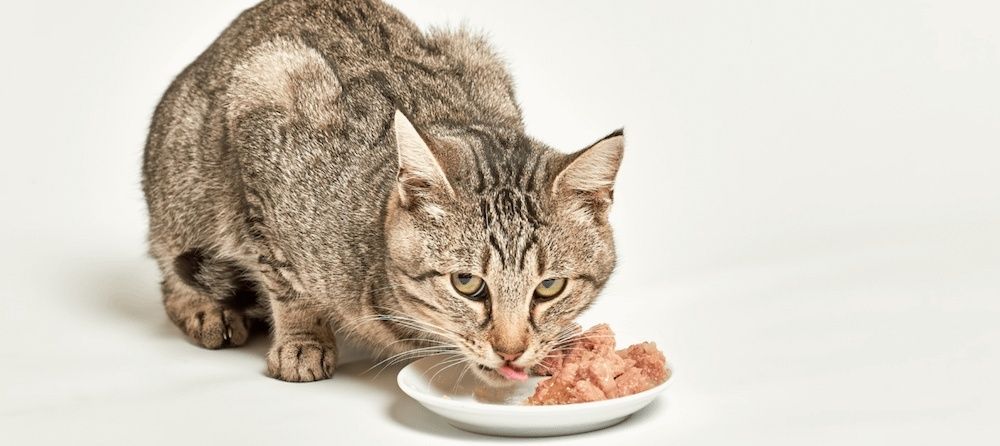
- Begin by offering a small portion of complete wet food beside the familiar diet rather than removing the established food without preparation.
- Increase the new portion slowly over several days or longer, adjusting the pace for sensitive, elderly, or medically fragile cats.
- Stir a teaspoon of water into accepted food, then increase gradually if stool quality and appetite remain normal.
- Use complete and balanced commercial diets, or obtain professional formulation advice for raw feeding. Raw diets require strict attention to nutritional completeness, hygiene, pathogen control, and appropriate calcium balance.
- Offer plain, unsalted, onion-free broth only as an occasional enticement, never as a replacement for balanced nutrition. Cooked bones and seasoned broths are unsafe.
Water placement also deserves quiet attention. Many cats prefer broad, shallow vessels that do not press against their whiskers, and some are attracted to moving water from a properly maintained circulating fountain. A fountain should be cleaned frequently, with filters replaced according to the manufacturer”s instructions. Place water in calm locations away from litter trays, busy walkways, and, for some cats, directly beside the feeding station. Several small stations may work better than one prominent bowl, particularly in a multi-cat home.
A practical daily routine might include wet meals divided into several portions, fresh water refreshed morning and evening, and a brief observation of litter-box output. Increased moisture should not be used to conceal concerning signs. Changes in urine volume, repeated visits to the box, blood, vocalization, genital licking, appetite loss, weight loss, or vomiting merit veterinary advice. Cats with diagnosed kidney disease, diabetes, heart disease, urinary obstruction, or previous stones need a plan that accounts for the whole patient rather than a generic hydration target.
Cultivating Lifelong Renal Vitality for Your Feline Companion
Moisture is one of the most practical variables a caregiver can influence every day. It supports urine dilution, helps move metabolic waste through the urinary tract, and reduces the concentration of minerals that can contribute to crystal formation. It is not a universal cure and cannot reverse established kidney damage, but it provides a biologically appropriate foundation for renal and urinary care when paired with complete nutrition, appropriate body condition, preventive examinations, and timely treatment.
Useful observations include supple skin, a smooth and well-groomed coat, steady appetite, stable body weight, and a consistent pattern of litter-box output. These signs are reassuring but not diagnostic. Cats can compensate quietly, and early renal or urinary disease may exist before outward changes become obvious. A calm moisture ritual, measured over months rather than judged from a single day, gives the kidneys a more supportive environment while preserving the cat”s comfort and confidence.
For the dedicated owner or breeder, the refined approach is simple in principle: respect the cat”s low thirst drive, make moisture-rich food appealing, offer water in feline-friendly ways, and monitor trends with veterinary guidance. This routine aligns domestic care with the physiology inherited from the desert hunter, helping protect the small renal structures that sustain a cat”s vitality throughout a long and carefully supported life.