
The Sensitive Shift: Building Gut Resilience During Kitten Weaning

Understanding the Delicate Architecture of the Neonatal Gut

The movement from a mother”s milk to solid food is one of the most metabolically demanding stages in a kitten”s early life. In a matter of weeks, the digestive tract must shift from processing a highly consistent liquid to handling animal protein, fat, connective tissue, and a changing population of intestinal microorganisms. Growth remains rapid, energy requirements are substantial, and even a modest reduction in intake can matter when a kitten has very little reserve, making careful monitoring a Client Challenge.

During the neonatal period, the intestinal lining depends on closely regulated mucosal junctions and on maternal immune support delivered through colostrum and milk. That passive protection does not remain constant. As maternal antibodies gradually taper, particularly across the broad transition between approximately four and eight weeks, the kitten”s own immune and intestinal systems must assume more responsibility. This is also the period when environmental exposure, litter changes, parasites, stress, and dietary experimentation can converge.

A rushed weaning routine can therefore produce more than temporary mess. Excessive formula, abrupt changes in protein or texture, contaminated preparation, and poorly tolerated ingredients may irritate the intestinal lining, alter water movement through the bowel, and disturb the emerging microbial community. The caregiver”s role is best understood as that of a biological steward: introducing new work for the digestive system in measured stages, while protecting warmth, hydration, appetite, sleep, and emotional security.

The Internal Symphony of Digestive Enzymes and Microbiome Shifts

Lactase activity is naturally high while a kitten is dependent on milk. As weaning begins, lactase production progressively down-regulates, often starting around the fourth week. This does not mean that every kitten loses the ability to tolerate milk replacer on a fixed date, nor does it justify removing formula abruptly. Rather, it explains why a milk-dominant diet becomes less physiologically appropriate as the kitten”s intestine prepares for more complex foods.

At the same time, pancreatic and intestinal digestive functions mature. Proteases become increasingly important for animal proteins, lipases support the digestion of dietary fat, and the handling of starches develops alongside the broader transition to solid food. The microbiome also becomes more diverse. A study of kittens examined before weaning and at several points afterward found meaningful changes in microbial communities, immune markers, serum metabolites, and metabolic pathways, demonstrating that weaning is a systemic event rather than a simple change of bowl contents. The findings are discussed in the research on dynamic kitten gut development.

When a new food arrives too quickly, undigested nutrients may remain in the intestinal lumen and draw water into the bowel through osmotic effects. Fermentation patterns can also change before the microbial community has adapted. The visible result may be soft stool or acute diarrhea, but the underlying concern is impaired hydration, reduced nutrient absorption, and irritation of immature enterocytes. Broader explanations of malabsorption in small animals are provided by the Merck Veterinary Manual.

  • Introduce one meaningful dietary change at a time.
  • Keep the initial recipe simple, complete, and appropriate for growing kittens.
  • Record stool quality, appetite, body weight, and energy rather than relying on a single observation.
  • Seek veterinary advice promptly when diarrhea is persistent, watery, bloody, accompanied by vomiting, or associated with lethargy or weight loss.

The practical challenge is that intestinal development varies between individuals. Littermates may reach for solid food at different rates, and an orphan, an underweight kitten, or a kitten recovering from illness may require a slower transition. The goal is not to make every kitten follow an identical calendar, but to align texture and composition with the kitten”s tolerance.

The Golden Timeline from Milk Replacer to Whole Protein Slurry

Weaning commonly begins at about four weeks, although readiness should be judged by behavior and physical stability as well as age. A kitten who can stand securely, explore, groom, show interest in the dam”s food, and lap voluntarily is often ready for gentle exposure. A warmed slurry made from a nutritionally complete kitten milk replacer and a high-quality wet kitten formula can provide a familiar aroma while introducing a new texture. The mixture should be smooth enough to lap easily, but not so thin that the kitten receives calories without learning the mechanics of eating.
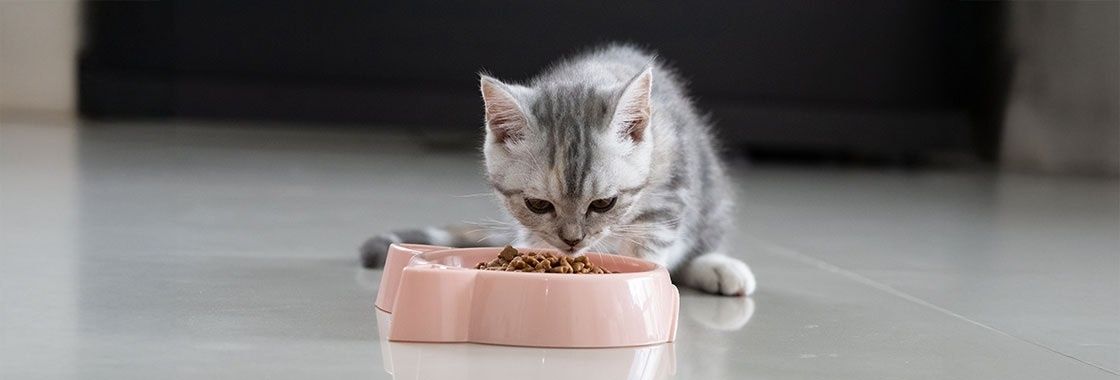
Gray-and-white kitten eating kibble from a pink bowl
Early exposure to a complete, moisture-rich diet helps kittens develop eating skills while formula support continues to protect energy intake.

Between weeks five and six, moisture can be reduced gradually. The texture may move from a liquid puree toward a soft mash, allowing the kitten to develop lapping, tongue control, and early mastication without being confronted by dry or fibrous pieces. Formula should not be withdrawn simply because a kitten has tasted food. It remains a valuable source of energy until solid intake is reliable, and any reduction should be matched by evidence that the kitten is eating, maintaining hydration, and gaining weight.

During weeks six and seven, the diet can become denser and more recognizably meaty, provided it remains a complete growth diet rather than plain muscle meat alone. A single primary protein can make troubleshooting easier, while frequent small meals protect against overloading a still-developing stomach. Stool consistency, urine output, appetite, posture, and body weight deserve daily attention. By weeks seven to eight, many healthy kittens can become independent of formula replacers, but the transition should remain flexible. Some individuals need additional support, particularly after illness or a period of inadequate intake.

Approximate age Primary objective Caregiver observations
Weeks 4 to 5 Offer a warm, smooth slurry of kitten formula and complete wet kitten food Voluntary lapping, continued nursing or bottle support, normal energy
Weeks 5 to 6 Reduce liquid gradually and encourage soft lapping and chewing Food intake increasing without persistent loose stool
Weeks 6 to 7 Use a moisture-rich, denser complete kitten diet Steady weight gain, good hydration, formed or appropriately soft feces
Weeks 7 to 8 Establish independence from replacer when intake is dependable Reliable meals, stable weight, comfortable digestion

Historical accounts of early feeding show why gradual adaptation has long been important in infant care, even though human and feline physiology are not interchangeable. The broader context is explored in A History of Infant Feeding. For kittens, the essential principle is species-appropriate nutrition, not the direct transfer of human feeding practices.

Milk replacers should be prepared according to the manufacturer”s directions, and a complete kitten diet should supply the nutrient density required for growth. Plain meat, homemade mixtures, cow”s milk, and improvised substitutions can create nutritional gaps or digestive upset. Product changes should also be gradual whenever possible. Rescue medicine guidance emphasizes appropriate nutrition, warmth for orphans, daily weight monitoring, and prompt attention to diarrhea and other common neonatal problems, as outlined in the Medical Care for Kittens Playbook.

Protocols for Protecting the Mucosal Barrier Against Dysbiosis

A highly digestible, complete kitten food based on a clearly identified primary protein can provide a calm starting point. Poultry or rabbit may be well tolerated by many kittens, but no protein is universally suitable, and novelty alone does not make an ingredient superior. The important qualities are digestibility, nutritional completeness, appropriate fat and mineral balance, and a formulation intended for growth. Rotating several proteins during the first days of weaning makes it difficult to identify the cause of a reaction.

Gastrointestinal stress often appears before dramatic diarrhea. A kitten may show mild abdominal distention, reduced enthusiasm at meals, less grooming, a duller coat, altered sleep, or slightly lower weight gain. These signs are not diagnostic by themselves, but they deserve a pause in dietary progression and a careful review of preparation, feeding volume, temperature, stool, parasites, and household stress. Kittens with persistent or worsening signs require veterinary assessment because diarrhea can reflect infection, coccidia, giardia, panleukopenia, overfeeding, or disease unrelated to the diet.

  • Keep food and utensils clean, and discard portions that have stood at room temperature.
  • Maintain appropriate warmth, especially for orphaned or weak kittens, because chilling impairs feeding and recovery.
  • Do not administer electrolytes, antidiarrheal products, probiotics, or medications without guidance appropriate to the kitten”s condition.
  • Preserve moisture through wet food and correctly prepared formula rather than relying on a kitten to drink large volumes of water.

Moisture is particularly valuable during weaning because a kitten with soft stool can lose fluid quickly. A species-appropriate wet diet supports water intake while providing energy in a form that is usually easier to consume than dry food. If stool becomes watery, the kitten stops eating, vomits, becomes weak, or fails to gain weight, home adjustments should not delay professional care. Hydration support may require intervention beyond food management.

Practical Daily Feeding Protocol for Smooth Dietary Evolution

Preparation should be quiet, hygienic, and consistent. Warm the food to approximately body temperature, around 100 degrees Fahrenheit, so that its aroma is inviting without overheating or damaging the food. Test the temperature before offering it. A shallow, stable dish allows a kitten to approach naturally, reduces face immersion, and limits food collecting around the nose and eyes. Whisker comfort matters: a broad saucer is often more inviting than a deep bowl, especially for a cautious kitten still learning to balance.

  1. Weigh each kitten at the same time each day using a digital gram scale, and record the result alongside food intake and stool quality.
  2. Offer small, fresh meals at regular intervals, keeping formula support available while solid intake is still developing.
  3. Change texture or protein gradually, then observe the kitten for the next day or two before making another significant adjustment.
  4. Clean the dish and the kitten”s face gently after eating, drying the surrounding fur to prevent skin irritation.
  5. Contact a veterinarian or rescue medical lead when weight gain stops, appetite falls, diarrhea persists, or the kitten appears weak or dehydrated.

Daily gram measurements are among the earliest practical warnings of weaning-associated malabsorption. A kitten can appear bright while quietly failing to meet its energy needs, and a single visual check may miss a downward trend. Weight should be interpreted with the kitten”s age, starting condition, and feeding history in mind, but a plateau or loss deserves attention. Growth charts and manufacturer feeding guidance can assist with planning, while individualized veterinary advice remains essential for compromised kittens.

Some kittens resist a new texture because it feels unfamiliar, not because they are incapable of weaning. Place a small amount on the lips only if the kitten accepts gentle handling, and never force food into the mouth or smear large quantities over the face. Allowing the kitten to investigate the dish, watching a calm adult cat eat, or mixing a little familiar formula into the new food can build confidence. If refusal continues, return briefly to the last well-tolerated stage and progress more slowly. A calm feeding environment protects both digestion and future mealtime behavior.

Cultivating Lifelong Feline Vitality from the Very First Bite

Weaning is a biological metamorphosis, not merely a decision to replace milk with food. Lactase activity changes, pancreatic digestion matures, the mucosal barrier continues developing, and the microbial community reorganizes while the kitten is also learning new motor skills and coping with a wider world. Each meal is therefore an opportunity to support development or, if introduced carelessly, to create avoidable digestive strain.

Patient progression, precise observation, excellent hygiene, adequate moisture, and timely veterinary support protect vulnerable enterocytes while allowing a stable gut ecosystem to emerge. Caregivers who respect the kitten”s pace do more than prevent a difficult bout of diarrhea. They establish confidence around food, preserve healthy growth, and give the developing cat the strongest possible foundation for lifelong feline vitality.

The Sensitive Shift: Building Gut Resilience During Kitten Weaning

Understanding the Delicate Architecture of the Neonatal Gut

The movement from a mother”s milk to solid food is one of the most metabolically demanding stages in a kitten”s early life. In a matter of weeks, the digestive tract must shift from processing a highly consistent liquid to handling animal protein, fat, connective tissue, and a changing population of intestinal microorganisms. Growth remains rapid, energy requirements are substantial, and even a modest reduction in intake can matter when a kitten has very little reserve, making careful monitoring a Client Challenge.

During the neonatal period, the intestinal lining depends on closely regulated mucosal junctions and on maternal immune support delivered through colostrum and milk. That passive protection does not remain constant. As maternal antibodies gradually taper, particularly across the broad transition between approximately four and eight weeks, the kitten”s own immune and intestinal systems must assume more responsibility. This is also the period when environmental exposure, litter changes, parasites, stress, and dietary experimentation can converge.

A rushed weaning routine can therefore produce more than temporary mess. Excessive formula, abrupt changes in protein or texture, contaminated preparation, and poorly tolerated ingredients may irritate the intestinal lining, alter water movement through the bowel, and disturb the emerging microbial community. The caregiver”s role is best understood as that of a biological steward: introducing new work for the digestive system in measured stages, while protecting warmth, hydration, appetite, sleep, and emotional security.

The Internal Symphony of Digestive Enzymes and Microbiome Shifts

Lactase activity is naturally high while a kitten is dependent on milk. As weaning begins, lactase production progressively down-regulates, often starting around the fourth week. This does not mean that every kitten loses the ability to tolerate milk replacer on a fixed date, nor does it justify removing formula abruptly. Rather, it explains why a milk-dominant diet becomes less physiologically appropriate as the kitten”s intestine prepares for more complex foods.

At the same time, pancreatic and intestinal digestive functions mature. Proteases become increasingly important for animal proteins, lipases support the digestion of dietary fat, and the handling of starches develops alongside the broader transition to solid food. The microbiome also becomes more diverse. A study of kittens examined before weaning and at several points afterward found meaningful changes in microbial communities, immune markers, serum metabolites, and metabolic pathways, demonstrating that weaning is a systemic event rather than a simple change of bowl contents. The findings are discussed in the research on dynamic kitten gut development.

When a new food arrives too quickly, undigested nutrients may remain in the intestinal lumen and draw water into the bowel through osmotic effects. Fermentation patterns can also change before the microbial community has adapted. The visible result may be soft stool or acute diarrhea, but the underlying concern is impaired hydration, reduced nutrient absorption, and irritation of immature enterocytes. Broader explanations of malabsorption in small animals are provided by the Merck Veterinary Manual.

  • Introduce one meaningful dietary change at a time.
  • Keep the initial recipe simple, complete, and appropriate for growing kittens.
  • Record stool quality, appetite, body weight, and energy rather than relying on a single observation.
  • Seek veterinary advice promptly when diarrhea is persistent, watery, bloody, accompanied by vomiting, or associated with lethargy or weight loss.

The practical challenge is that intestinal development varies between individuals. Littermates may reach for solid food at different rates, and an orphan, an underweight kitten, or a kitten recovering from illness may require a slower transition. The goal is not to make every kitten follow an identical calendar, but to align texture and composition with the kitten”s tolerance.

The Golden Timeline from Milk Replacer to Whole Protein Slurry

Weaning commonly begins at about four weeks, although readiness should be judged by behavior and physical stability as well as age. A kitten who can stand securely, explore, groom, show interest in the dam”s food, and lap voluntarily is often ready for gentle exposure. A warmed slurry made from a nutritionally complete kitten milk replacer and a high-quality wet kitten formula can provide a familiar aroma while introducing a new texture. The mixture should be smooth enough to lap easily, but not so thin that the kitten receives calories without learning the mechanics of eating.

Gray-and-white kitten eating kibble from a pink bowl
Early exposure to a complete, moisture-rich diet helps kittens develop eating skills while formula support continues to protect energy intake.

Between weeks five and six, moisture can be reduced gradually. The texture may move from a liquid puree toward a soft mash, allowing the kitten to develop lapping, tongue control, and early mastication without being confronted by dry or fibrous pieces. Formula should not be withdrawn simply because a kitten has tasted food. It remains a valuable source of energy until solid intake is reliable, and any reduction should be matched by evidence that the kitten is eating, maintaining hydration, and gaining weight.

During weeks six and seven, the diet can become denser and more recognizably meaty, provided it remains a complete growth diet rather than plain muscle meat alone. A single primary protein can make troubleshooting easier, while frequent small meals protect against overloading a still-developing stomach. Stool consistency, urine output, appetite, posture, and body weight deserve daily attention. By weeks seven to eight, many healthy kittens can become independent of formula replacers, but the transition should remain flexible. Some individuals need additional support, particularly after illness or a period of inadequate intake.

Approximate age Primary objective Caregiver observations
Weeks 4 to 5 Offer a warm, smooth slurry of kitten formula and complete wet kitten food Voluntary lapping, continued nursing or bottle support, normal energy
Weeks 5 to 6 Reduce liquid gradually and encourage soft lapping and chewing Food intake increasing without persistent loose stool
Weeks 6 to 7 Use a moisture-rich, denser complete kitten diet Steady weight gain, good hydration, formed or appropriately soft feces
Weeks 7 to 8 Establish independence from replacer when intake is dependable Reliable meals, stable weight, comfortable digestion

Historical accounts of early feeding show why gradual adaptation has long been important in infant care, even though human and feline physiology are not interchangeable. The broader context is explored in A History of Infant Feeding. For kittens, the essential principle is species-appropriate nutrition, not the direct transfer of human feeding practices.

Milk replacers should be prepared according to the manufacturer”s directions, and a complete kitten diet should supply the nutrient density required for growth. Plain meat, homemade mixtures, cow”s milk, and improvised substitutions can create nutritional gaps or digestive upset. Product changes should also be gradual whenever possible. Rescue medicine guidance emphasizes appropriate nutrition, warmth for orphans, daily weight monitoring, and prompt attention to diarrhea and other common neonatal problems, as outlined in the Medical Care for Kittens Playbook.

Protocols for Protecting the Mucosal Barrier Against Dysbiosis

A highly digestible, complete kitten food based on a clearly identified primary protein can provide a calm starting point. Poultry or rabbit may be well tolerated by many kittens, but no protein is universally suitable, and novelty alone does not make an ingredient superior. The important qualities are digestibility, nutritional completeness, appropriate fat and mineral balance, and a formulation intended for growth. Rotating several proteins during the first days of weaning makes it difficult to identify the cause of a reaction.

Gastrointestinal stress often appears before dramatic diarrhea. A kitten may show mild abdominal distention, reduced enthusiasm at meals, less grooming, a duller coat, altered sleep, or slightly lower weight gain. These signs are not diagnostic by themselves, but they deserve a pause in dietary progression and a careful review of preparation, feeding volume, temperature, stool, parasites, and household stress. Kittens with persistent or worsening signs require veterinary assessment because diarrhea can reflect infection, coccidia, giardia, panleukopenia, overfeeding, or disease unrelated to the diet.

  • Keep food and utensils clean, and discard portions that have stood at room temperature.
  • Maintain appropriate warmth, especially for orphaned or weak kittens, because chilling impairs feeding and recovery.
  • Do not administer electrolytes, antidiarrheal products, probiotics, or medications without guidance appropriate to the kitten”s condition.
  • Preserve moisture through wet food and correctly prepared formula rather than relying on a kitten to drink large volumes of water.

Moisture is particularly valuable during weaning because a kitten with soft stool can lose fluid quickly. A species-appropriate wet diet supports water intake while providing energy in a form that is usually easier to consume than dry food. If stool becomes watery, the kitten stops eating, vomits, becomes weak, or fails to gain weight, home adjustments should not delay professional care. Hydration support may require intervention beyond food management.

Practical Daily Feeding Protocol for Smooth Dietary Evolution

Preparation should be quiet, hygienic, and consistent. Warm the food to approximately body temperature, around 100 degrees Fahrenheit, so that its aroma is inviting without overheating or damaging the food. Test the temperature before offering it. A shallow, stable dish allows a kitten to approach naturally, reduces face immersion, and limits food collecting around the nose and eyes. Whisker comfort matters: a broad saucer is often more inviting than a deep bowl, especially for a cautious kitten still learning to balance.

  1. Weigh each kitten at the same time each day using a digital gram scale, and record the result alongside food intake and stool quality.
  2. Offer small, fresh meals at regular intervals, keeping formula support available while solid intake is still developing.
  3. Change texture or protein gradually, then observe the kitten for the next day or two before making another significant adjustment.
  4. Clean the dish and the kitten”s face gently after eating, drying the surrounding fur to prevent skin irritation.
  5. Contact a veterinarian or rescue medical lead when weight gain stops, appetite falls, diarrhea persists, or the kitten appears weak or dehydrated.

Daily gram measurements are among the earliest practical warnings of weaning-associated malabsorption. A kitten can appear bright while quietly failing to meet its energy needs, and a single visual check may miss a downward trend. Weight should be interpreted with the kitten”s age, starting condition, and feeding history in mind, but a plateau or loss deserves attention. Growth charts and manufacturer feeding guidance can assist with planning, while individualized veterinary advice remains essential for compromised kittens.

Some kittens resist a new texture because it feels unfamiliar, not because they are incapable of weaning. Place a small amount on the lips only if the kitten accepts gentle handling, and never force food into the mouth or smear large quantities over the face. Allowing the kitten to investigate the dish, watching a calm adult cat eat, or mixing a little familiar formula into the new food can build confidence. If refusal continues, return briefly to the last well-tolerated stage and progress more slowly. A calm feeding environment protects both digestion and future mealtime behavior.

Cultivating Lifelong Feline Vitality from the Very First Bite

Weaning is a biological metamorphosis, not merely a decision to replace milk with food. Lactase activity changes, pancreatic digestion matures, the mucosal barrier continues developing, and the microbial community reorganizes while the kitten is also learning new motor skills and coping with a wider world. Each meal is therefore an opportunity to support development or, if introduced carelessly, to create avoidable digestive strain.

Patient progression, precise observation, excellent hygiene, adequate moisture, and timely veterinary support protect vulnerable enterocytes while allowing a stable gut ecosystem to emerge. Caregivers who respect the kitten”s pace do more than prevent a difficult bout of diarrhea. They establish confidence around food, preserve healthy growth, and give the developing cat the strongest possible foundation for lifelong feline vitality.