
The Architecture of Whisker Fatigue: Sensory Mechanics and Low-Stress Dining Zones
Understanding Whisker Sensitivity and the Modern Feline Meal
A cat”s whiskers are not decorative hairs placed around the muzzle. They are highly specialized tactile instruments, formally known as vibrissae, that help a cat judge openings, detect nearby movement, orient the head, and interpret the immediate space around the face. Each vibrissa is anchored far more deeply than an ordinary coat hair and is associated with a dense network of sensory nerves. This arrangement gives the cat an extraordinarily detailed impression of its surroundings, even in dim light.
That sensitivity can become inconvenient in a domestic feeding setup. A narrow, steep-sided bowl may repeatedly press against the whisker pads as the cat reaches for food, turning an ordinary meal into a sequence of small but persistent tactile interruptions. The term “whisker fatigue” is widely used for this experience, although the scientific evidence for a distinct clinical syndrome remains limited. The underlying concern is nevertheless reasonable: repeated facial contact may contribute to feeding hesitation or aversion in some cats. A whisker-friendly feeding surface, combined with a quiet dining zone, offers a sensible way to reduce avoidable sensory friction without treating every feeding difficulty as a whisker problem.
Microscopic Anatomy and Sensory Pathways of the Vibrissae
Individual whiskers emerge from specialized follicle-sinus complexes embedded deeply within the skin. Unlike ordinary hair follicles, these structures contain a blood-filled sinus and an extensive arrangement of connective tissue and nerve endings. Movement of the whisker shaft displaces the surrounding tissues, allowing mechanical information to travel rapidly to sensory pathways associated with the trigeminal nerve. The result is a sophisticated system capable of registering direction, pressure, vibration, and the proximity of nearby surfaces.
Within the skin, Merkel cell-neurite complexes contribute to the perception of fine spatial detail. Merkel cells are associated with slowly adapting type I sensory responses, which are useful when the nervous system must continue monitoring a contact rather than register it only as a brief event. Research reviewed in a detailed analysis of Merkel cell touch receptors describes evidence that Merkel cells themselves can respond to mechanical displacement and communicate with associated Aβ sensory neurons. This helps explain why a cat may remain aware of a bowl edge touching the whisker region throughout an entire meal.
A single brush against a whisker is not inherently harmful. The concern is the cumulative pattern created when the facial hairs repeatedly collide with a rigid perimeter, especially if the dish is narrow and the food is spread along the sides. Such contact sends a continuing stream of mechanical information into the feline trigeminal system. Cats vary considerably in facial structure, whisker length, temperament, and tolerance, so the same bowl may be inconsequential for one individual and distinctly irritating for another. Practical observation matters more than assuming that every cat experiences identical discomfort.
- Deep follicle-sinus complexes amplify movement and pressure information.
- Merkel cell-neurite structures support sustained, fine-grained tactile processing.
- Repeated bowl contact may create sensory distraction or feeding reluctance in sensitive cats.
- Whisker sensitivity should be considered alongside appetite, posture, oral health, and household stress.
Decoding Micro-Expressions and Subtle Feeding Aversions
Early signs of feeding discomfort are often understated. A cat may approach the dish with interest, then pace beside it, pause repeatedly, or use a paw to remove pieces before eating them from the floor. Some cats drop kibble, turn the head sideways, or consume only the food positioned in the center. Paw-dipping can also reflect a preference for manipulating food, uncertainty about the bowl, or a desire to inspect an unfamiliar surface, so it should be interpreted as part of a broader behavioral pattern rather than as proof of whisker irritation.
Facial expression provides additional information. During an uncomfortable meal, the whisker pads may appear drawn back, the eyes may narrow, and the brow region may look tense. The ears can rotate laterally or backward, while the cat may keep the body poised for withdrawal instead of settling into a relaxed eating posture. These details are subtle because cats often continue eating despite environmental discomfort. A calm cat typically approaches with a fluid posture, lowers the head without abrupt hesitation, and remains composed rather than repeatedly repositioning the face.
Feeding aversion must never be attributed automatically to whiskers. Dental disease, gingivitis, tooth resorption, oral ulcers, nausea, gastrointestinal illness, pain, and changes in smell can all alter eating behavior. Warning signs such as drooling, bad breath, blood around the mouth, chewing on one side, weight loss, vomiting, persistent appetite reduction, or vocalization during meals warrant veterinary assessment. Current feline feeding guidance emphasizes that evidence for “whisker stress” is limited and that health causes of reduced appetite should be investigated. The review Feeding Cats for Optimal Mental and Behavioral Well-Being also highlights the importance of monitoring intake, body condition, food hygiene, and natural feeding behavior rather than relying on a single explanation.
- Observe whether the cat avoids the bowl or avoids eating altogether.
- Compare behavior with a broad plate for several days, while keeping the food unchanged.
- Record appetite, chewing style, grooming, weight, stool quality, and signs of nausea.
- Arrange veterinary care for persistent changes or any indication of oral pain.
Engineering the Ideal Feeding Dish and Ergonomic Station
The most useful feeding surface preserves a generous tactile margin around the food. A wide, shallow dish or flat platter allows the cat to lower the muzzle without compressing the whisker pads against a vertical wall. The lip should be low and gently angled rather than sharply upright. Smooth, non-porous materials such as stainless steel or glazed ceramic are generally preferable because they are easier to clean and less likely to retain odors than scratched plastic. Cleanliness matters: stale residues and bacterial buildup can reduce palatability even when the dish appears visually acceptable.
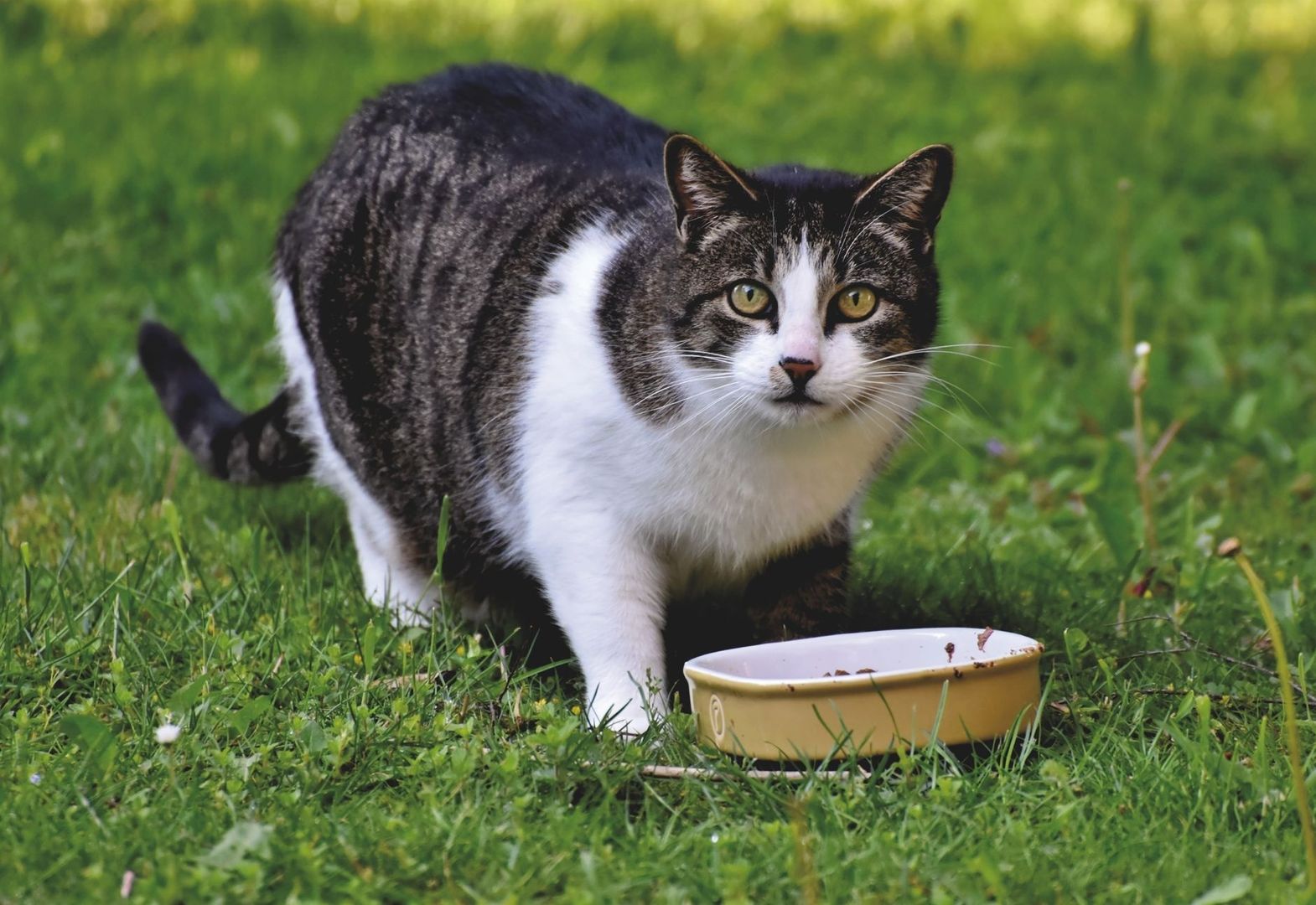
Traditional deep ceramic bowls can be stable and attractive, but depth and shape may create unnecessary facial contact. Whisker-relief platters are designed to provide more lateral space, while elevated stands can alter the angle of the head and neck. Neither feature is universally superior. A broad platter placed directly on the floor may suit a healthy adult cat perfectly, whereas a modestly raised dish may be useful for an older cat with reduced flexibility or musculoskeletal discomfort. Excessive height or a pronounced tilt can force an unnatural posture and may create instability, so ergonomic adjustment should be guided by the individual cat”s body size and movement.
Retail listings frequently promote raised, tilted, stainless-steel, and wide-bowl designs, but popularity is not the same as veterinary validation. Products shown in raised cat bowl listings illustrate the range of available formats, including stands with non-slip bases and shallow or tilted dishes. Selection should focus on measurable comfort, secure footing, easy washing, and the cat”s observed posture rather than on marketing language such as “anti-vomiting” or “whisker relief.”
| Design feature | Practical benefit | Points to assess |
|---|---|---|
| Wide diameter | Preserves space around the whisker pads | Ensure the cat does not have to lean excessively |
| Shallow, gently sloped sides | Reduces repeated facial contact | Avoid sharp rims and unstable lightweight dishes |
| Stainless steel or glazed ceramic | Supports thorough cleaning and odor control | Inspect regularly for scratches, chips, or residue |
| Moderate elevation | May improve neck alignment for some cats | Match height to the cat and watch for shoulder strain |
Creating a Low-Stress Spatial Sanctuary for Daily Dining
Dish design is only one part of a comfortable meal. Cats are predators that evolved to capture and consume multiple small prey items rather than eat one large portion in a single communal location. The review on feline mental and behavioral well-being notes that cats commonly choose approximately eight to sixteen small meals when given the opportunity, although individual needs and modern feeding schedules vary. Dividing the daily ration into measured portions, using suitable food puzzles, or offering several small feeding moments can support natural foraging without encouraging uncontrolled calorie intake.
Location deserves equal attention. A feeding station positioned beside a washing machine, dishwasher, boiler, loud fan, or frequently opened door can make meals feel exposed and unpredictable. Litter trays should be placed well away from food, and multi-cat households may require separate feeding venues so that a timid cat is not forced to eat under another cat”s surveillance. A quiet corner with a clear line of retreat is often preferable to a visually convenient corridor. The aim is not complete isolation, but a predictable perimeter where the cat can eat without sudden approach, competition, or mechanical noise.
A low-stress station should also be hygienic and easy to maintain. Wash food dishes regularly, remove wet food promptly, and replace damaged surfaces. If food and water are placed together, observe the cat”s preference rather than enforcing a universal rule, since evidence does not establish that all cats need these resources separated. Enrichment should be introduced gradually, with puzzle difficulty matched to the individual. Feeding choices that reduce stress must still preserve measured daily intake and appropriate veterinary nutrition.
- Watch one or two complete meals without interrupting, noting posture, facial tension, pacing, and food handling.
- Move the dish away from litter areas, busy passageways, loud appliances, and direct household competition.
- Replace narrow or deep bowls with a stable, wide, shallow surface and provide a washable mat beneath it.
- Offer a second quiet feeding venue, particularly in a multi-cat home or for a cautious individual.
- Measure the daily ration, introduce enrichment gradually, and reassess appetite, body condition, and behavior.
Cultivating Mindful Dining Rituals for Lifelong Well-Being
Small environmental adjustments can have a meaningful cumulative effect. A broad dish reduces unnecessary contact around the muzzle, a stable posture makes eating more fluid, and a quiet location allows the cat to remain attentive to food rather than household disturbances. Together, these changes may support calmer feeding behavior and more comfortable digestion, although they should be understood as practical welfare measures rather than a guaranteed treatment for a formally defined disease.
Feline sensory tolerance can change with age, dental condition, arthritis, declining vision, altered hearing, or shifts in household relationships. Continue to observe the details of each meal, and treat a persistent appetite change as a health question rather than a simple equipment preference. The most thoughtful feeding station is designed through the cat”s sensory architecture: generous tactile margins, predictable access, clean materials, measured nutrition, and the freedom to eat without pressure. Human convenience may determine where a bowl fits, but feline comfort should determine whether it truly belongs there.